THE CURSE OF VASTU ON INDIAN ARCHITECTURE

MY EXPERIENCE WITH SOME CHARLATANS HIJACKING RATIONAL THINKING

Throughout architecture academia in India, students are asked to design keeping in mind the context of the site, the landscape, the cultural aspects of the region, the bye-laws, and so on. Once the student graduates and starts working, they realize all that was total garbage in a real sense within the Indian context. The typical Indian client has been so brainwashed by superstition and pseudo-religious preaching that they have lost the ability to question the irrational and to try and defy obvious superstition.

I will not argue the merits of an architect when compared to a vastu “consultant” (an epithet I strongly dislike to associate with such frauds), as it demeans the value added to a project by a skilled, and trained member of the former group. The blatant fear-mongering of a practitioner of this pseudoscience has been causing permanent damage (in some cases quantifiable damage) to the built environment in the city. Architects are having to compromise on almost every single aspect of designing a building due to the deep-seated fear of the unknown which has been actively propagated by the charlatans in our midst.

From a scientific point of view, Indian buildings today would be classified as being quite inefficient when judged in terms of natural lighting, ventilation, or even general planning. But from an Indian point of view, the same building might be perfect, as judged from the “Vastu compliance” standpoint. If a site or a building is not vastu compliant, the property value immediately drops by a certain percentage, and some ‘poojas’, and vastu ‘correction’ interventions are made to the project to counter the “evil forces” that might be lurking within the yet unoccupied building of brick and concrete. One might argue that this lends a unique “Indianness” to the designs. But, is that something we would like to be representative of Indian architecture? Inefficiency, and wastefulness? 

This makes me ask – what does vastu contribute to a project? Apart from the artificial peace of mind given to the client, I can think of nothing else that can’t be achieved in a better form from a scientific approach to the design process. Vastu has led to the homogenization of modern Indian architecture to an ideology away from “Form follows function”, or even “Function follows form”, to a very disappointing “Form and function follow vastu”. The fear-mongering by the charlatans in our midst has led to the impractical, and often heavy underutilization of land. This belief in vastu gets further reinforced when we have Chief Ministers such as K. Chandrashekar Rao demolition existing secretariat buildings to build a new “Vastu compliant” secretariat during the pandemic. The very people who are meant to represent the best in us succumb to the appeal of this false balm called vastu. 

At a personal level, with my few years out of architecture school, I have witnessed first-hand the heavy deterioration in the measurable quality of life in a building brought by vastu. The architectural gymnastics that have to be performed to counter potential ill will from an inanimate structure are astounding. Burying a copper wire to “straighten” a site, having a deeper sump tank to ensure one quadrant is deeper than the other, foregoing cross ventilation, and even avoiding a rainwater harvesting tank because it would make the housing project incompatible with vastu are some of the insane directives that have been forced upon the clients – and by extension, the architects too. All sorts of unnecessary and unscientific compromises have to be made to appease the baseless fears evoked in the clients by these bottom feeders. These fraudsters have captured the imagination of the people using fear and religion, upending the years of logical thought that a person gains through real-life experience. If one of these vastu peddlers truly believes in the nonsense that they spout from their mouths, they should be subjected to psychological evaluation. And even if they don’t believe in it, they should still be subject to the evaluation – we might end up learning something about manipulative disorders.

“If someone doesn’t value evidence, what evidence are you going to provide to prove that they should value it? If someone doesn’t value logic, what logical argument could you provide to show the importance of logic?”
― Sam Harris
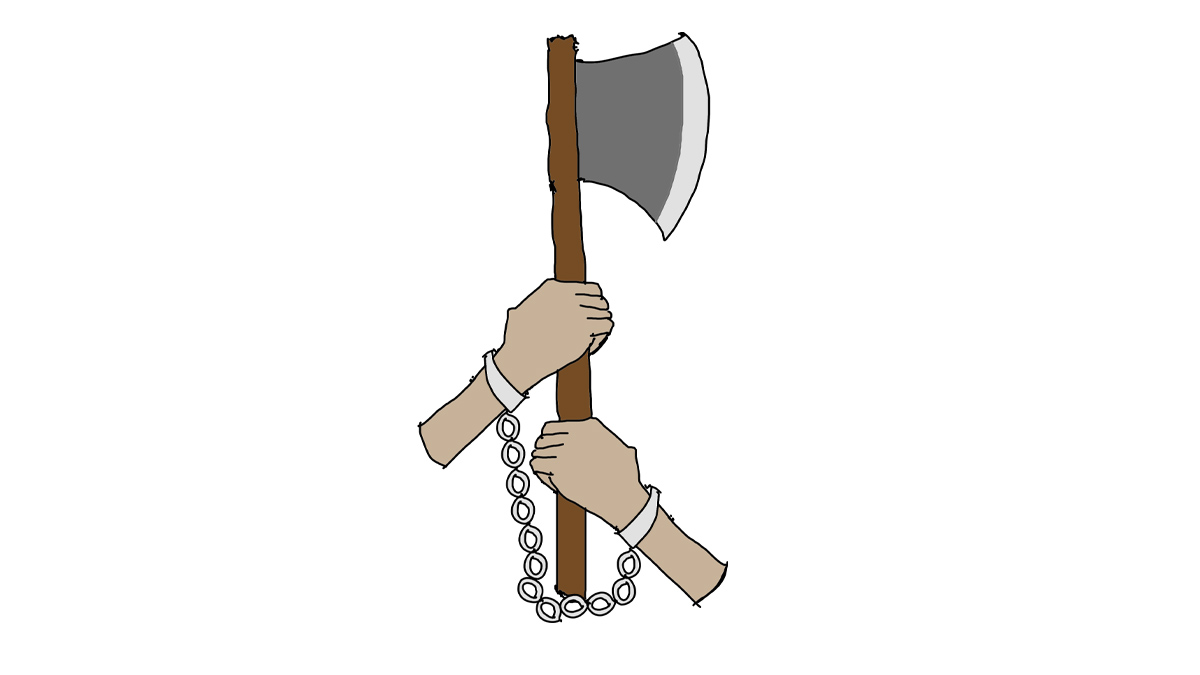
CRIME AND PUNISHMENT

CRIME, GUILT, AND PUNISHMENT – A REVIEW OF THE CLASSIC NOVEL BY FYODOR DOSTEYEVSKY

THE BOOK

What is the value of a human life? Are some lives more valuable than others? Do some people have a natural right to take the life of others? These are few questions that man has been asking himself since he developed a moral compass, and these are the questions that Fyodor Dostoyevsky deals with in Crime and Punishment.

Crime and Punishment is a lengthy treatise in the form of a novel on the psychology and morality of a crime. It has examined the mind of one individual who commits one of the gravest legal crimes – murder. The story is set in St. Petersburg of the late 1880s and is about the murder of an old pawnbroker and her sister by the antihero, Raskolnikov. We find the lead character Raskolnikov as a conflicted individual with a theory on “the right to kill”, and ends up putting the theory to practice. The theory is simple. People are of two categories – the leaders and the followers. The leaders are those who take humanity forward and have the moral authority to take lives as they see fit. Raskolnikov holds Napoleon as an example of this man. The other category is what the majority of people fall under, and are for whom the rules and laws are written for.

The more we learn about Raskolnikov, the more we learn about Dostoyevsky too. A man who was quite ahead of his time with ideas such as equality for women, open marriages, the politics of an unequal society, class discrimination, and the treatment of prostitutes in society. He brings these ideas through very well composed characters who are depicted as intelligent outsiders in society.

Considered to be the first great psychological novel, Crime and Punishment introduces a number of characters in different societal and mental states. The interactions between these characters might seem odd today, but probably was how it the societal construct was in 19th century Russia.

The constant sense of panic and guilt in the book made me quite uncomfortable, but I assume that was the intended reaction. The scenes between Raskolnikov, and the investigator Porfiry are the best parts of the book and here we see a detachment in the question of murder itself. The question of “Is murder correct?” shifts from morality to legality. The questions tormenting Raskolnikov about the murder were purely concerned with whether he has a moral right while Porfiry is unconcerned with it and only follows the letter of the law.

Crime and Punishment is an interesting book that could do with quite a bit of editing today. The first two books can be heavily edited and compressed into a single part. The translation itself can undergo another translation into something more modern.

[I read the Constance Garnett translation (and would recommend this over McDuff. I read the Pevear/ Volokhonsky of ‘Notes from the underground’ and did not find it very appealing) and I believe the translation can be further translated to an even more modern English.]

Note:

The major side characters of the novel include Raskolnikov, his friend Razumikhin; his sister Dounia and their mother; Peter Petrovich, a rich manipulative suitor for his sister; Porfiry, the officer in charge of investigating the murders; the proverbial prostitute with a golden heart – Sonia, the daughter of Marmedalov – a drunk he met in a bar; Nikolai – a young painter working below the apartment where the murders occur, and who confesses to being the murderer, and Svidrigalov, a man in whose house Dounia worked as a governess.

THE STORY AND THEMES

The antihero, Raskolnikov, is an intelligent young man who has been subjected to penury and forced to quit law school as he is unable to pay the fee. After great thought, he decides to take the life of a rude old moneylender and steal from her. He initially justifies this in his mind several ways, calling her an evil hoarder that the world will be better off without; and at the end even resorting to omens. But on the day he kills the woman, he enters into a frenzy and when her sister stumbles upon the crime, he kills her too. These murders turn out to be more than what Raskolnikov could take, and he falls into a psychosomatic illness. Raskolnikov runs from the scene, buries his loot, and gets home and immediately falls sick. Raskolnikov’s is taken care of by his servant, Anastasia and his friend Razumikhin in this time. When he awakens, he spurns everybody around him and reacts only when they talk about the murdered pawnbroker.

Razumikhin and Raskolnikov go to meet Porfiry, the official investigating the murders. The confrontations between Porfiry, an intelligent investigator, and a troubled Raskolnikov form the most intense parts of the book. Porfiry immediately hints at his suspicion on Raskolnikov and appears to show all his cards while interrogating Raskolnikov. He pounds Raskolnikov over and over, goading him into letting something slip. The first time, Porfiry and Raskolnikov meet at Porfiry’s house when Raskolnikov is taken there by Razumikhin. In this instance, Porfiry shows that he is one step ahead of Raskolnikov when he questions Raskolnikov on an article he had written for a magazine anonymously. Thus ensues an intense “cat & mouse” psychological battle between Porfiry and Raskolnikov where Porfiry shows his superior understanding of the criminal mind, taking advantage of every weakness displayed by an agitated Raskolnikov. His observation torments Raskolnikov endlessly and he barely escapes him. After intense arguments with Porfiry, where he is indirectly, and later directly accused of being the murderer, Raskolnikov becomes increasingly desperate and cuts off contact with his family and entrusts their wellbeing to Razumikhin.

He tries to find redemption in Sonia, the woman who is the antithesis of everything Raskolnikov; the woman who sacrificed her body, soul and integrity so that she can provide for her family. A woman who takes insult and pain so that her step siblings and delusional step mother don’t have to. As Razumikhin spirals into further desperation and instability, he tries to find purpose and meaning. He concludes that he is not one among the few “leaders”, but is still conflicted on whether he feelsguilt on the act of murder itself.

CRIME, GUILT AND PUNISHMENT

If I could add one word to the title, it would be “guilt”. As the name suggests, the book plays with the themes of crime and punishment. But along with them, the concept that runs throughout the book is guilt. Marmedalov’s guilt for ruining his family with drink, resulting in Sonia becoming a prostitute; Sonia’s guilt for ruining the reputation of her family with her work, her mother’s guilt in being unable to take care of her family, Svidrigalov’s guilt for his approaches on Dounia, Razumikhin’s guilt in his inability to save Raskolnikov, Raskolnikov’s guilt for the murders, and even Nikolai’s religious guilt in “not suffering”. This undercurrent of guilt felt through every page makes us quite uneasy.

Dostoyevsky takes us into the minds of various characters from various walks of life, exploring the guilt manifesting in people in various ways – from illness to suicide. This depth of understanding of the human psyche ensures that Dostoyevsky will remain relevant for ages. We might all relate to the motives and guilt of at least one character and find the psyche of another to be completely absurd. It is the guilt that leads to the conclusion of the story and I found myself quite conflicted with the ending. Putting myself in that place, would I have done the same thing? Probably, but probably not. We might never know unless we find ourselves in that place.

MY ARCHITECTURE

MY ARCHITECTURE – A RANT

A majority of architects the world over, and especially in India, have this idea that they know more than the rest. They know more than the client, the policymakers, the specialists, and more than the end-users themselves. We believe that as generalists, we have a more accurate understanding of issues at hand than everybody else. We pretend as if architecture is the solution to all problems – be it homelessness, or societal evils.

Reputed architects who have won all the prestigious awards there are, speak and write eloquently about architecture; about the beauty and passion that it evokes, about the power of spaces, volumes, and so on, which is listened to, and read eagerly almost exclusively by other architects. But how true and applicable is it to the general population?

Any successful architect in India caters only to the top 0.1, or 0.01% of the population. The number of architects in the country is low enough for all the reputed ones to be able to design residences and luxury apartments worth much more than what an entire family in the bottom 50% earn in their lifetime.

Every day, on my way home from work, I see a smorgasbord of inequality on the streets I pass through. These range from families sleeping on pavements, beggars with injuries, children selling roses and cheap toys, and a plethora of heart-wrenching scenes which show the disparity within the population. Nothing shows that we still have a long way to go than the visual of a street beggar child trying to sell a Chinese made plastic toy to another child in the back seat of a Mercedes car.

Architects have a God complex when it comes to judging the impact of their designs. We tend to believe that regardless of the nature of evil, a built form should be able to provide a solution. In most cases of practical implementation, we fail to make any noticeable dent, in the rest we make matters worse. In a classic case of survivorship bias, the few cases that do make a noticeable impact, thanks mostly due to other circumstances at play, are showcased as an example of the wonders architecture can have on society. This has led to architects slowly moving away from designing for the users, to designing for other architects. An emphasis on using the best western methods, the self-congratulatory assessments, and the lack of follow-up on the projects over the long term have led to the almost complete absence of meaningful architecture, and the complete lack of self-awareness.

Upon looking at the impact of homelessness on the streets, as a product of the Indian architecture myself, my initial thoughts were to provide a system of social housing for the homeless in the city. This of course brings up a few crucial points such as corruption, land availability, identifying and correctly providing to the target community, debate on the use of public funds to provide valuable real estate to others, and so on that immediately negate the idea of social housing in an Indian context, at least that of providing free housing or lodging for the homeless – which is the only solution that would be of any meaningful help. The move into subsidized housing might help the set of people in the economic strata above whom we would want to help, but the targeted audience themselves will see no benefit arising from this project.

At this point, it is necessary to start looking at architecture as merely a vehicle to translate the word of policy into brick and stone. Architecture by itself is an antipyretic pill for a severe fever. It might alleviate the symptoms of the disease, but it does not cure the disease. We need something more powerful for that, and that is the rule of law. Policymakers, and policy framework are not looked at very closely, or offered inputs to by practicing architects. This is a cyclical problem where architects are not approached, so they don’t give their inputs, so they are not approached, so they don’t…

Architects criticize the policies quite vocally in air-conditioned auditoria and niche print and digital media after the policies have been approved and implementation has begun; which are again consumed almost exclusively by other architects. This feedback loop reiterates the notion that architects know more than the rest, and that western architecture and urban design theory can be easily retrofitted to an Indian context with relative ease.

As one of the members of the architecture community in the country, I believe that it is time for us to first, accept the limitations of architecture; and second, to recognize the failures and hypocrisy of the architectural community who design for the top 1%, but claim to know what is right for the 99%. Policymaking should be encouraged by the governing architecture bodies, and students must be made to study and read realistic and local successes in the implementation of policy through architecture, instead of being encouraged to solve societal evils through a building.

End rant.

K.A.S.T